SALATIGA – Students from the Environmental Health concentration of the Department of Public Health, Faculty of Health Sciences, Universitas Muhammadiyah Surakarta (UMS), participated in a field practicum at the Center for Public Health Laboratory (BBLabKesmas) Salatiga on May 12, 2026. The activity was organized to enhance students’ competencies in public health entomology, vector surveillance, and zoonotic disease investigation through hands-on laboratory experience.
The program began with an introduction to the facilities and functions of BBLabKesmas Salatiga, highlighting its role in disease surveillance, vector identification, laboratory diagnostics, and public health services. Students were then guided through a series of practical sessions led by experienced laboratory personnel and veterinary professionals.
One of the main activities involved the identification of mosquito species that serve as vectors for infectious diseases. Students learned to distinguish mosquito species based on their morphological characteristics using microscopes and explored their epidemiological significance in the transmission of diseases such as Dengue Fever, malaria, and lymphatic filariasis.
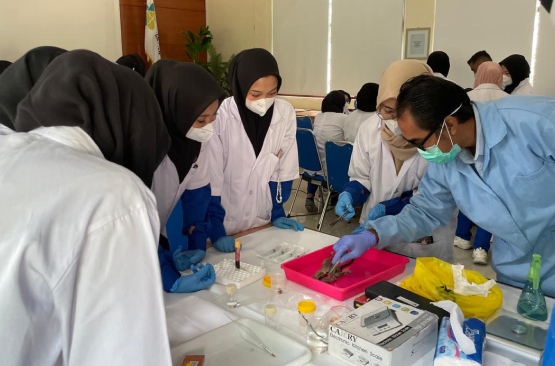
The practicum also included mosquito dissection, allowing students to examine the anatomical structures of mosquitoes and gain a deeper understanding of vector biology. This exercise provided valuable insights into the scientific principles underlying vector surveillance and vector control programs in public health.
In addition, students participated in a rat dissection session to study one of the most important reservoirs of zoonotic diseases. Through this practical activity, they observed the anatomy of laboratory animals, learned proper dissection techniques, and understood specimen collection procedures used in disease surveillance and laboratory investigations.
Throughout the program, students were supervised by several veterinarians specializing in animal surgery and pathology. The instructors provided direct guidance on safe dissection procedures, the proper use of surgical instruments, and the implementation of biosafety and biosecurity principles during laboratory activities.
The field practicum was designed as part of the department’s experiential learning approach, enabling students to integrate classroom knowledge with professional laboratory practice. By engaging directly with vector identification and zoonotic disease investigation, students gained a more comprehensive understanding of the critical role laboratories play in supporting disease prevention, surveillance, and public health interventions.
The Department of Public Health UMS remains committed to providing practice-oriented education that aligns with current public health challenges and workforce needs. Through its collaboration with BBLabKesmas Salatiga, the department continues to equip students with technical expertise, laboratory competencies, and professional experience, preparing them to become highly skilled public health practitioners capable of addressing vector-borne and zoonotic diseases at both national and global levels.