SURAKARTA – The Public Health Study Program, Faculty of Health Sciences (FIK), Universitas Muhammadiyah Surakarta (UMS), held an inspiring session on community empowerment featuring Hardika Dwi Hermawan, S.Pd., M.Sc., a lecturer in Informatics Education at UMS and Founder of Desamind. The session encouraged students to develop a broader understanding of community empowerment and the strategic role of young people in creating sustainable social change.
During the session, Hardika emphasized that community empowerment is more than simply providing assistance. Instead, it is a process of enabling communities to build their capacity, solve problems independently, and foster long-term self-reliance. This perspective highlights the importance of empowering people to become active participants in improving their own quality of life.
Drawing from his extensive experience accompanying communities across Indonesia, Hardika shared practical insights into participatory development and community-based approaches. He explained that successful empowerment initiatives require collaboration, trust, and the active involvement of local communities, with young people serving as key drivers of innovation and transformation.
The discussion also encouraged Public Health students to recognize their future role as agents of change. Through the knowledge and skills they gain during their studies, students are expected to contribute meaningfully to addressing public health challenges while supporting community development through evidence-based and sustainable initiatives.
This activity reflects the Public Health Study Program UMS’s commitment to providing students with learning experiences that connect academic knowledge with real-world practice. By engaging with experienced practitioners and social innovators, students are better prepared to become public health professionals who are adaptive, collaborative, and committed to empowering communities.
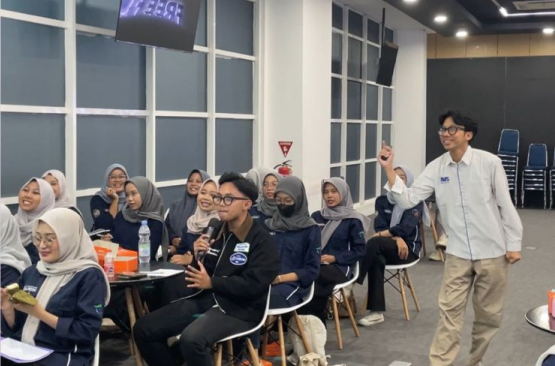
The session concluded with an interactive discussion, motivating participants to begin making positive contributions from their own communities and reinforcing the belief that meaningful social impact starts with empowered individuals and collective action.