The condition of the world that is experiencing a pandemic due to the Covid-19 virus makes all activities adapt to this pandemic situation. Many agencies or offices have to make changes to the way they work and make new rules as an effort to prevent the transmission of the Covid-19 virus.
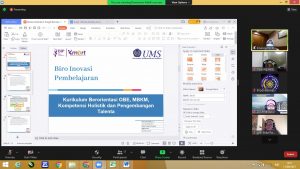
None other than in the education sector, the teaching and learning process which was originally face-to-face (Offline) changed to Online (In-Network). The University of Muhammadiyah Surakarta (UMS), which is part of the education sector, did not escape from changing lectures which were originally offline to online.
The Public Health Study Program of the Faculty of Health Sciences which is part of UMS also continues to share innovations so that lecturers and students can quickly adapt to this online lecture. All lectures are made online using the meeting platform that is already available and follow the rules that have been made by UMS . In the Public Health Study Program, apart from theoretical lectures, there is also practice, this practice itself is carried out in the laboratory and some is carried out outside the campus. In the practical laboratory, videos are made by supporting lecturers assisted by laboratory assistants, for off-campus practices, some are carried out in the community and in office or company agencies.
The UMS Public Health Study Program has just carried out practical activities for students outside the campus, namely Field Learning Practice I (community) which was carried out online from February 1 to March 29, 2021, followed by 7th semester students and for the area according to the domicile of each student.
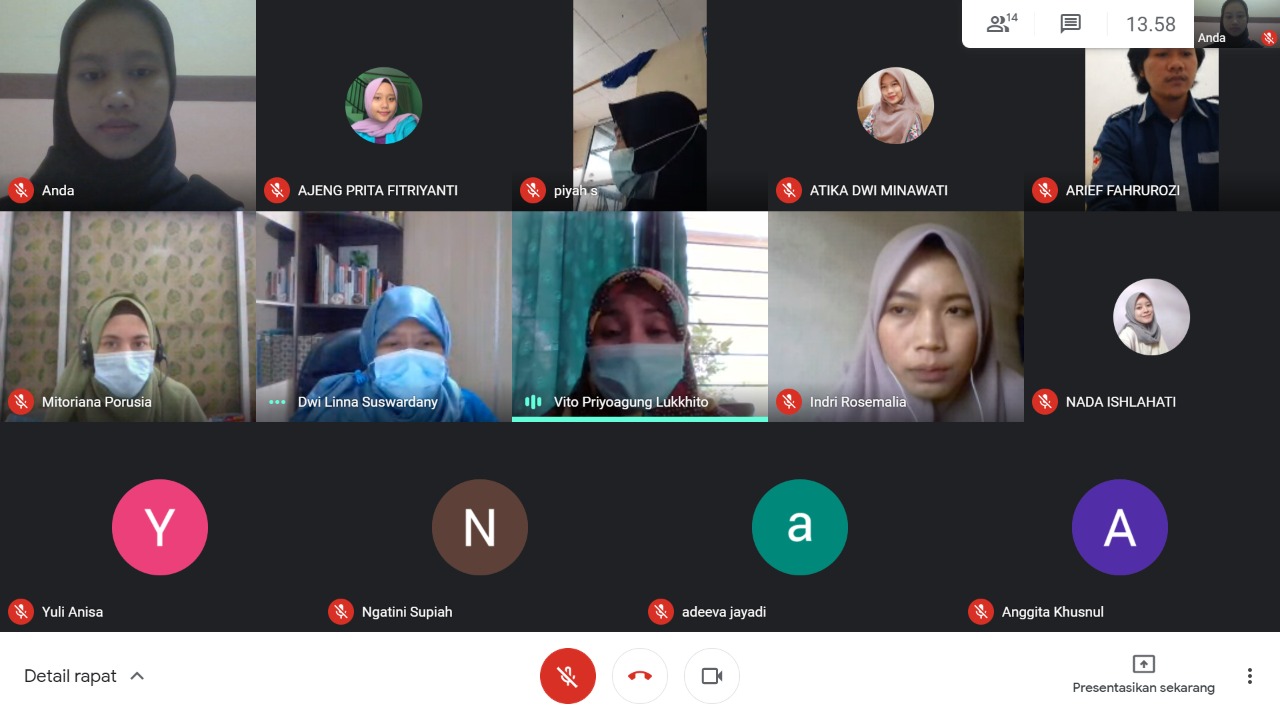
PBL activities are carried out to apply lecture materials that have been obtained by students. In its implementation, the study program creates a guidebook containing online PBL procedures, starting from PBL lectures, implementation such as taking care of permits, analysis, surveys and deliberation using platforms according to community conditions, for example meeting applications and whats app groups.
According to the PBL coordinator, Mrs. Rezania Asyfiradayati, S.KM., MPH and Mrs. Izzatul Arifah, S.KM., M.Kes, Alhamdulillah, the online PBL implementation went smoothly even though she still had problems but according to her the problem was not a problem that would interfere with the PBL operation and would we discussed in the PBL I and II evaluation meetings.
And don’t forget to also thank all stakeholders such as village officials, health workers and the community who have sincerely helped and guided the students in the implementation of PBL, not to forget we also thank the supervisor of the public health study program who always helps